Alright, still behind the times, will probably catch up to my normal movie viewing schedule at some point. Queue for the last week of October (sort of):
The Birds - 1963 (check)
All About My Mother - 1999 (check)
Talk to Her - 2002 (check)
Experimental Week (check)
Generally I'm not going to do a lot of same year movies but Away We Go has been a point of curiosity for me for a while so I figure if I don't put more than one really recent (say within the last three years) film on the queue, I don't think it'll be too obstructing of my unwritten project rules.
On Another Note:
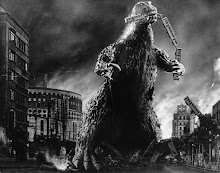
The Birds and Frankenstein are kind of Halloween themed, which is unintentional but still cool. The Birds is just something I've been meaning to see and I think this might be the third time I've put it down in my queue. And Frankenstein is because someone at work was talking about the original Frankenstein today and I love me some monster films so uh...yeah.
On Yet Another Note:
Okay so Frankenstein was panned, because my queues are sporadic things that have no fixed presence. I think the only film that remained from the original list was Birds.
Saturday, October 24, 2009

Living in Oblivion

Living in Oblivion (1995)
[http://www.imdb.com/title/tt0113677/]
The Gist:
Living in Oblivion is one of those films for filmmakers. It is a film about the oft maelstrom of film, what I lovingly refer to as the Murphy's Law of Film, that being of course "whatever can go wrong, will go wrong". That's what this film is, and it shows this through these weird repetitions of one bad day of shooting through the dreams of the director, the actress, and presumably the last segment wasn't a dream but who knows. Anyway, through most of the film its excellent, it has a lot of humor that is given knew meaning through working with film and it does this cool thing where it brings elements from one dream into the other (like the eye patch that the cinematographer is wearing through the whole film, having "hurt" his eye in the second segment). The film as a whole wasn't perfect, it had some muddled moments, it had small tonal issues but for the most part it was solid. That is up until a very anti-climatic ending with a kind of lukewarm sequence of day dreams from the cast and crew. In the end, it still carries a lot of weight in the context of filmmaking but isn't much of a film beyond that.
Sarkar

Sarkar (2005)
[http://www.imdb.com/title/tt0432047/]
The Gist:
I have a time tested rant about film adaptations and the fact that you must deviate from the original source and continue the process of creating new moments or else the story will stagnate. Well Sarkar does so and does so well and it still kind of sucks (not the most academic term I know). Anyway, you know you might be in trouble when you watch an Indian "remake" of Godfather produced through Bollywood but sans all the dancing and singing (because this is a serious film). Note that if there was bollywood singing and dancing this movie could have been awesome in a really weird and strange way. As it is, it almost seems good until you realize it isn't. Why? Part of it is how pervasive the Hollywood style of filmmaking is with this film, the camera is constantly moving, they're trying interesting little compositions, they have a quicker pace of editing. And yet the camera seems to move and frame its subjects without motivation save perhaps that of looking cool. In fact, the whole film felt like it was posturing for stylized greatness, it was indulgent and tried to move so quickly that plot holes plagued every other scene. Also, the film as a whole seemed to be joined together in a clumsy and crass fashion. It just wasn't very good, but the ending re-envisioning of the revenge crescendo of Godfather was still kind of cool.
Anatomy of a Murder

Anatomy of a Murder (1959)
IMDB #209 [http://www.imdb.com/title/tt0052561/]
The Gist:
This is basically the original badass courtroom flick. And like many things, its contemporary brethren pale in comparison. However, the film is by no means perfect. For one thing it has a slow start and I think just a little could have been cut from the beginning. All the exposition with Jimmy and whoever the old guy was is perfect but after that it's little slow on the uptake. Beyond that, some might take issue with how little the film goes into the actual reality of the murder, though it alludes to there being something beyond what is shown on film. I actually liked this aspect because you have the same vantage as your protagonist, the always awesome James Stewart. Anyway, beyond this its all good. Stewart chews up scenery in the court, playing up one of his more wily characters. But the true soul of the film is the oddities of the character, his playing jazz in a juke joint or how he talks to the judge about the best way to catch frogs with a fishing line. Anyway it's a great film, gives the back and forth in the courtroom very well and manages to please with its character performances too. Well at least with Stewart, almost everyone is else is a predictably two dimensional character. Maybe not George C. Scott or whoever played the judge, they both felt real as well.
Network

Network (1976)
IMDB #226 [http://www.imdb.com/title/tt0074958/]
The Gist:
I thought I had Network pegged before I watched it: your potent cautionary film about the dangerous path media is traveling down, away from authentic journalism and toward profit obsessed sensationalism. In a sense, it is that movie, but it manages to be more than that. Its soul is an odd thing, it takes on almost unnoticeable surreal tone (except toward the very end were it becomes very obvious that that is there intent). And at the same time, you have a fascinating protagonist (who is not Peter Finch although you would never know it going into the film) who seems to have no real purpose being in the film past the first half. At least on a surface level he has absolutely nothing to do with the plot, he just sticks around and has an affair with the woman who takes over his job. However, the film succeeds because what happens on the surface means a great deal when it comes to everyone except the protagonist and absolutely nothing when it comes to him. After all, he's the only one who escapes television without being consumed. So not only does his lack of purpose work all on its own (and it does), but it fits on a thematic level too. Pretty cool.
On Another Note:
Peter Finch's rants in this film are all awesome.
Sunday, October 18, 2009
Week Seven
Oi, so behind this week. I blame midterms, even though I've been procrastinating with them too. I can probably blame Uncharted 2 more accurately. Anyway, the new week's queue which will get finished at some point:
The Anatomy of Murder (1959) - check
Living in Oblivion (1995) - check
Sarkar (2005) - check
Network (1976) - check
Saturday, October 17, 2009
Cache

Cache (2004)
[http://www.imdb.com/title/tt0387898/]
The Gist:
Cache (or Caché) is a film with a Hitchcockian style of suspense, only with this film the threat is extremely abstract. It is simply videotapes of someone watching their house, then a videotape of the husband's home as a child, then a videotape of the husband's vague conversation with another man, and so on. These tapes fill the opening moments with a feeling of dread, but that slips away as the film goes on. In its stead is the mystery of who is sending the tapes, the mystery of the husband's past, the mystery of the wife's potential affair, and so on. In fact, the film has a tendency to take something severe and then soften the blow. One example is the resolution of their son being kidnapped, another is the explanations of the husband's past (you kept waiting for something more to be revealed, but soon find that it was all there was). And then the tapes... This film defies all expectations of wrapping things up neatly, which might be off putting to some but does add to the overall experience in the long run. In any case, where the film truly succeeds is taking an unknown, external threat and exerting pressure on its characters, watching the honest pathos of a frightened and conflicted couple emerge.
Subscribe to:
Posts (Atom)